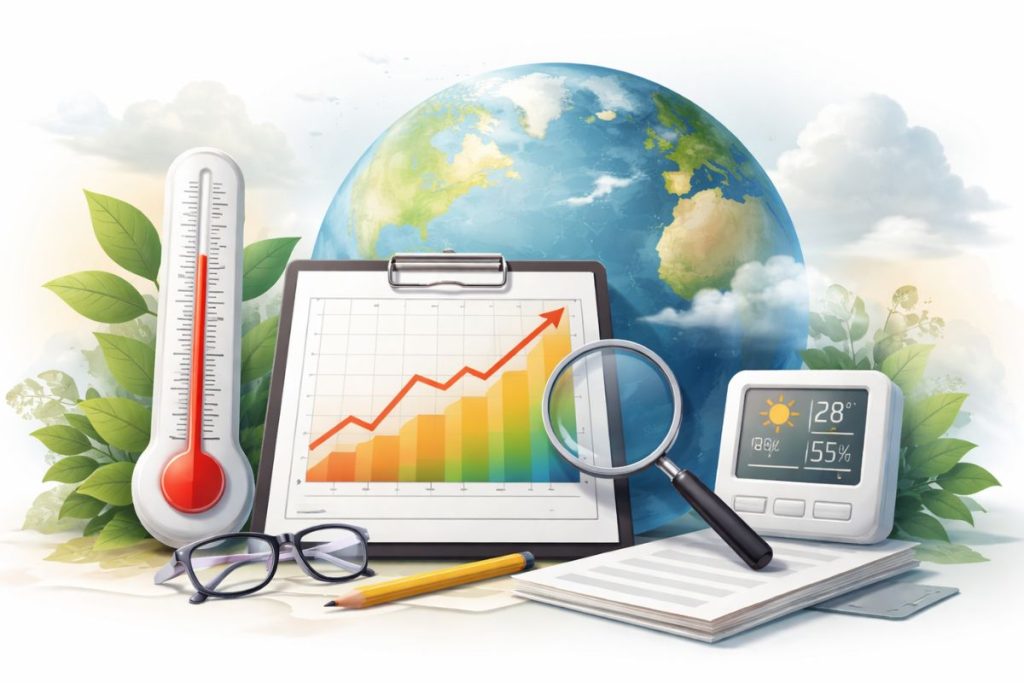
Hot days feel more common than they used to. Winters feel shorter in some places. In others, weather swings feel harder to predict. Many people notice these shifts through daily experience, whether they check forecasts for travel, plan outdoor work, or follow weather updates on their phones. Understanding temperature trends helps put these daily observations into context and makes climate-related news easier to interpret.
Most people begin with real-time conditions. A quick look at the current weather shows what is happening right now in cities and regions around the world. That snapshot matters. Yet it only tells part of the story. Long-term temperature trends reveal how today’s conditions fit into patterns that unfold over decades, not hours.
Quick Overview
This article explains how temperature trends differ from daily weather, how rising temperatures are measured, and why regional patterns matter. It also looks at how public information shapes risk awareness and why clear data helps people understand long-term change.
Why Temperature Trends Matter Today
Temperature trends affect daily life in quiet ways. A longer warm season can change energy use. Hotter summers influence work schedules, school activities, and public health planning. These effects build slowly, which makes them easy to overlook.
Short-term weather can distract from that bigger picture. A cold week may feel like proof that nothing has changed. A heat wave may feel like a sudden shock. Trends help explain why both can happen within a warming climate. They offer context, not arguments.
Clear understanding supports better conversations. It helps readers separate immediate conditions from long-term direction. That clarity also reduces confusion when climate stories appear in the news.
The Difference Between Weather and Temperature Trends
Weather describes what happens day to day. Rain, wind, and temperature shifts belong to this category. Weather can change quickly and often surprises people.
Temperature trends work differently. They rely on measurements gathered over many years. Scientists compare long-term averages rather than single events. This approach smooths out short-term swings and reveals broader movement.
A single hot summer or cold winter does not define climate direction. Trends emerge only after many seasons of data. That difference explains why one storm or heat wave cannot stand alone as evidence of lasting change.
How Rising Temperatures Are Measured Over Time
Public agencies and researchers track temperature using consistent methods. Weather stations record daily readings. Satellites provide broader coverage. Historical records extend these measurements back decades.
Analysts compare long-term averages rather than isolated numbers. This process reduces noise and highlights steady movement. It also allows comparison across regions and time periods.
Transparency plays a key role. Public datasets allow independent review and reuse. Discussions around government data use show how shared information supports long-term planning across many fields. Climate data follows the same principle. Open access builds trust and improves understanding.
What Temperature Trends Reveal About Regional Change
Rising temperatures do not affect all places in the same way. Cities often experience higher heat due to dense construction and limited green space. Rural areas may warm at different rates depending on land use and geography.
In large and geographically diverse countries, these contrasts become especially visible. Looking at the weather in the United States shows how temperature patterns can differ widely between coastal regions, inland areas, and major urban centers within the same season.
Coastal regions face unique patterns influenced by oceans. Inland areas often see larger swings between seasons. These differences shape local challenges and responses.
Infrastructure decisions matter here. Roads, buildings, and housing density influence how heat affects daily life. Research on urban development patterns shows how population growth and planning choices intersect with environmental conditions. Temperature trends help explain why some communities feel impacts sooner than others.
Temperature Trends and Public Risk Awareness
Rising temperatures shape how people think about risk. Heat waves affect health, especially for older adults and outdoor workers. Seasonal shifts can strain power systems and water supplies.
Clear communication matters. Without context, extreme events feel sudden and alarming. With long-term data, they become easier to place within a broader pattern.
Other public risks follow a similar path. Coverage of earthquakes, floods, or storms often improves when long-term context is available. Articles about public risk awareness show how historical data helps people interpret sudden events without panic. Temperature trends serve the same role for climate-related risks.
The Role of Public Information in Climate Understanding
Climate information works best when it remains accessible and clear. Charts, summaries, and plain explanations help readers stay engaged. Complex language can push people away.
Public trust grows when data sources are visible and methods are clear. People may disagree on responses, but shared facts support informed discussion. This approach keeps conversations grounded.
Accessible information also helps people connect daily experience with long-term change. A warm afternoon feels different when viewed as part of a decades-long pattern rather than an isolated moment.
What Research Says About Global Temperature Change
Global temperature records show steady increases over time. Multiple institutions track these changes using independent methods. Their findings align closely.
Research focuses on observation and measurement. Scientists compare long-term records to understand direction and pace. This work relies on shared standards and transparent methods.
Publicly available sources like global temperature data allow anyone to review long-term trends. These records help explain why many regions experience warmer averages even as short-term variability continues.
Making Sense of Temperature Trends Over Time
Understanding temperature trends helps people interpret weather more calmly and accurately. It bridges the gap between daily experience and long-term change.
Access to clear data supports informed awareness. It helps readers follow climate news without confusion or alarm. Over time, that clarity strengthens public discussion and builds confidence in shared information.
Temperature trends tell a slow story. Paying attention to that story helps society understand where it stands and how conditions evolve.