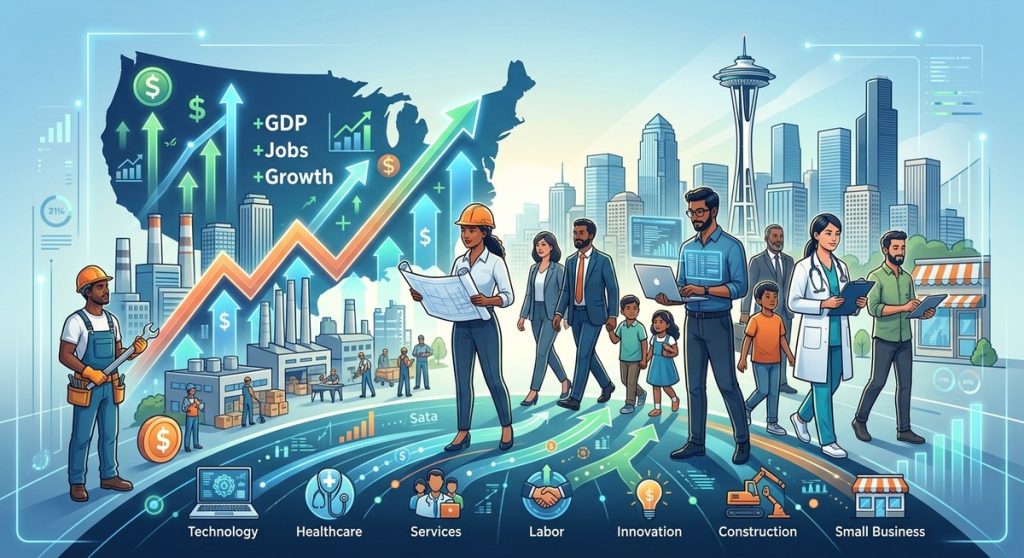
Washington voters are living in a moment when economic forces across state and local levels intersect with national trends. From how the state budgets lean toward resilience or risk, to how housing costs shape family budgets, to how climate and energy policy recalibrates jobs and investment, the trajectory of Washingtons economy matters for households, workers, and communities. This article offers a clear, nonpartisan look at the key economic issues affecting Washington State, the data behind them, and what voters should watch as policy discussions unfold. Our aim is to help readers make informed judgments grounded in facts rather than slogans.
Fiscal Health and Budget Fundamentals
Washington State operates within a complex fiscal framework that blends general fund revenues, dedicated accounts, and long term obligations. Understanding the budget basics helps voters assess policy proposals that touch the balance between investing in services and maintaining financial stability.
Revenue Trends and Reserves
- The state relies on a mix of sales taxes, business taxes, and transfers from dedicated funds. Economic cycles influence the size and stability of these revenues.
- Rainy day reserves function as an important cushion during downturns. Observers often compare reserves to general fund expenditures to gauge preparedness for revenue shocks.
- Practical questions for voters include: Are reserves sufficient to weather a recession without triggering large cuts to essential services? How quickly can reserves be rebuilt after a downturn?
Debt, Liabilities, and Credit Outlook
- Like many states, Washington carries long term liabilities including debt service for capital projects and pensions. The share of government revenues devoted to debt service affects room for new investments.
- Credit ratings and outlooks from major agencies can signal perceived risk and influence borrowing costs for future infrastructure projects.
- Policy considerations for voters include: What is the plan to manage debt responsibly while sustaining critical investments like schools, bridges, and transit?
Policy Implications for Fiscal Health
- Proposals that expand programs without commensurate revenue sources can deepen deficits if not paired with reforms or revenue enhancements.
- Conversely, policies that improve efficiency, close loopholes, or restructure spending can offer room for targeted investments without increasing debt.
- An informed choice for voters is to weigh the tradeoffs between short term needs and long term fiscal sustainability.
Tax Policy and Revenue Stability
Tax policy shapes the incentives that attract businesses, support households, and fund public services. Washington’s approach to taxes affects competitiveness, distribution of tax burdens, and the ability to fund essential programs.
Assessing the Tax Structure
- Washingtons tax system includes broad based revenue sources as well as targeted credits and exemptions. The balance between efficiency and equity is a central theme in any reform discussion.
- Tax policy stability matters for families planning budgets and for businesses making investment decisions. Recurrent changes can create uncertainty that dampens growth.
Recent Tax Policy Movements and Their Impacts
- Legislative actions that alter tax rates or credits can affect disposable income and after tax profitability for firms of varying sizes.
- Businesses in sectors such as technology, manufacturing, and retail may respond differently to tax changes, which can influence hiring and investment.
- Voters should consider whether proposed changes promote growth while maintaining fairness, and whether safeguards protect low and middle income households.
Policy Options for a Stable Revenue Base
- Simplify complex tax credits to reduce administrative costs and malfeasance risk.
- Broaden base while preserving critical reliefs for families with modest incomes.
- Tie certain revenue measures to performance metrics or economic indicators to guard against volatility.
Housing Affordability and the Labor Market
Housing costs remain a central issue for households across Washington. The link between labor markets and housing accessibility shapes mobility, family formation, and economic opportunity.
Why Housing Costs Matter for the Economy
- When housing consumes a large share of income, households have less to spend on goods and services, which can slow demand in the broader economy.
- Labor markets function best when workers can live near job centers, reducing commute times and improving productivity.
- The construction sector, zoning policies, and permitting processes directly affect housing supply and affordability.
Labor Market Trends
- Washingtons job market has shown strength in technology, healthcare, and trade related sectors, but wage growth must keep pace with the rising cost of living for real improvements in households.
- Skills alignment between education and local industry determines the ease with which workers move into higher paying roles.
- For voters, key questions include whether training programs align with employer needs and whether housing policies encourage new homes near job hubs.
Policy Tools to Improve Affordability
- Streamline permitting and reduce regulatory delays that slow new construction.
- Invest in affordable housing development and targeted subsidies for renters in high cost areas.
- Expand job training and apprenticeship programs to widen pathways into high paying careers.
Population Growth, Migration, and Demographics
Washingtons population continues to grow, driven by in state jobs and migration from other states and countries. This dynamic has wide reaching implications for schools, infrastructure, and tax bases.
Economic Impacts of Growth
- A growing workforce can boost economic output and innovation, but it also increases demand for housing, transportation, and public services.
- Immigration plays a notable role in the labor supply, particularly in sectors like agriculture, healthcare, and technology oriented industries.
- Demographic shifts influence long term fiscal projections, including retirement trends and demand for schools and elder care.
Balancing Growth with Services
- Investments in infrastructure, transit, and water systems can reduce congestion and improve reliability for workers and businesses.
- Education systems must scale to prepare students and adults for a changing economy, including retraining for new technologies and industries.
- Voters should assess proposals by how they address both immediate needs and long term capacity growth.
Climate Policy and Economic Transition
Climate change and the transition to a lower carbon economy interact closely with job creation, energy costs, and the competitiveness of Washingtons industries.
Energy Costs and Reliability
- Energy policy affects both household bills and industrial competitiveness. Diversified energy portfolios can reduce price volatility.
- Investments in transmission and storage can improve reliability, support growth in clean energy sectors, and enable electrification of transport and industry.
Jobs in the Green Economy
- Clean energy projects, energy efficiency retrofits, and resilient infrastructure offer employment opportunities across rural and urban areas.
- The transition also requires training programs to prepare workers for higher skilled roles in manufacturing, construction, and engineering.
Policy Considerations for Voters
- Does proposed climate policy create predictable costs for households while expanding access to employment in growing sectors?
- Are there safeguards to protect workers in traditional energy industries while supporting retraining and new opportunities?
- How will climate investments influence long run economic resilience and regional development?
Infrastructure, Transportation, and Public Investment
Reliable infrastructure underpins commerce, commuting, and quality of life. Washington faces needs across roads, bridges, ports, transit, and digital connectivity.
The Role of Public Investment
- Infrastructure projects improve productivity by reducing travel time, lowering maintenance costs for fleets, and enhancing supply chain resilience.
- Ports, highways, and rail connections support regional exports and attract private investment.
- Broadband access is increasingly essential for education, small businesses, and remote work opportunities.
Budgetary and Political Considerations
- Capital projects must balance cost, impact, and timing. Delays can increase costs and reduce benefits.
- Public investment efficiency matters as technology brings new options for design and project delivery.
- Voters should evaluate proposals for how they prioritize projects, ensure accountability, and leverage federal funds when possible.
Education, Workforce Development, and Productivity
A well aligned education system and effective workforce development are engines of long term economic growth. Washington faces the challenge of preparing a diverse student population for a dynamic job market.
Education Outcomes and Economic Returns
- Early childhood education, K-12 quality, and higher education attainment correlate with higher earnings and greater economic mobility.
- Community colleges and technical training programs bridge gaps between school and work, supporting regional industries with skilled labor.
- Lifelong learning and reskilling opportunities help workers adapt to automation and shifting demand.
Workforce Policies that Drive Growth
- Expand apprenticeships and sector based training in high demand fields.
- Align curricula with industry needs to improve graduate readiness and retention in state.
- Support programs that help under served communities access good paying jobs.
Small Business Climate and Entrepreneurship
Small businesses are a fundamental part of Washingtons economy, driving innovation and local employment. The policy environment, access to capital, and regulatory clarity influence startup success and growth trajectories.
Challenges Facing Small Businesses
- Access to capital and credit can be a limiting factor for startups and scale ups.
- Regulatory complexity and compliance costs can disproportionately affect small firms.
- Labor market dynamics, including wage expectations and turnover, shape operating costs.
Policy Tools to Support Growth
- Streamline licensing and reduce unnecessary red tape to speed up time to market.
- Create targeted relief during economic shocks and provide information resources for compliance.
- Encourage public private partnerships to leverage capital for community based projects.
Immigration and Washingtons Economic Tores
Immigration policies and the presence of immigrant workers have meaningful economic effects. In Washington, immigrant labor contributes to sectors like agriculture, health care, technology, and hospitality.
Economic Contributions
- Immigrant workers fill critical roles in both high skill and essential service sectors.
- Population growth supported by immigration can support tax bases and consumer demand.
- Diverse communities contribute to entrepreneurship and cultural vitality that enhances regional competitiveness.
Considerations for Policy
- Policies that recognize and integrate immigrant workers can reduce labor shortages in vital sectors.
- Support systems for language training, credential recognition, and pathways to legal status can improve workforce outcomes.
- Voters should assess how immigration policy interacts with education, housing, and social services.
Policy Scenarios and Voter Considerations
To translate the data into practical decision making, voters can consider several scenarios and ask pointed questions about each.
1) Fiscal prudence scenario
– Emphasizes maintaining reserve levels, prioritizing debt management, and funding core services.
– Questions to ask: Are new programs offset by revenue or efficiency gains? What is the plan to replenish reserves after downturns?
2) Growth oriented scenario
– Seeks to attract investment through tax incentives, streamlined regulations, and targeted infrastructure.
– Questions to ask: Will growth come with adequate housing, transit, and education to sustain it? How will price pressures be managed for families?
3) Climate and resilience scenario
– Builds green jobs, modern infrastructure, and resilient energy systems.
– Questions to ask: What are the job pipelines for workers transitioning from other sectors? Are costs passed fairly to consumers, and are there protections for vulnerable households?
4) Inclusive prosperity scenario
– Focuses on equitable access to opportunity, affordable housing, and workforce development for all communities.
– Questions to ask: How will policy reduce disparities in education and wages? What targeted supports exist for renters and first time home buyers?
Practical Takeaways for Washington Voters
- Look for data driven policy proposals that balance immediate needs with long term sustainability. The best plans typically combine prudent budgeting with investments in people, infrastructure, and innovation.
- Evaluate how proposals address housing affordability in both urban and rural communities. Without accessible homes near jobs, even a strong labor market cannot boost economic mobility.
- Consider the roles of immigration, education, and training in expanding the states economic potential. A workforce pipeline that aligns with industry needs is essential for sustained growth.
- Pay attention to climate policy effects on jobs and energy costs. The right approach can create new opportunities while protecting households from volatility.
- Finally, demand transparency around how policy changes will be paid for. Budgets should include clear funding sources and measurable outcomes.
Conclusion
The economy of Washington State is a tapestry of interwoven forces: fiscal health, tax policy, housing dynamics, demographic change, climate transition, infrastructure, and the labor market. For voters, the key is to separate slogans from data and to weigh policy options by their ability to deliver resilience, opportunity, and fairness. Fact checks and careful analysis help us see beyond headlines and understand how decisions today shape the livelihoods of families tomorrow. At factcheckwa.org, we will continue to bring you nonpartisan, evidence based insights into the key economic issues facing our state, so voters can engage with confidence and clarity.